
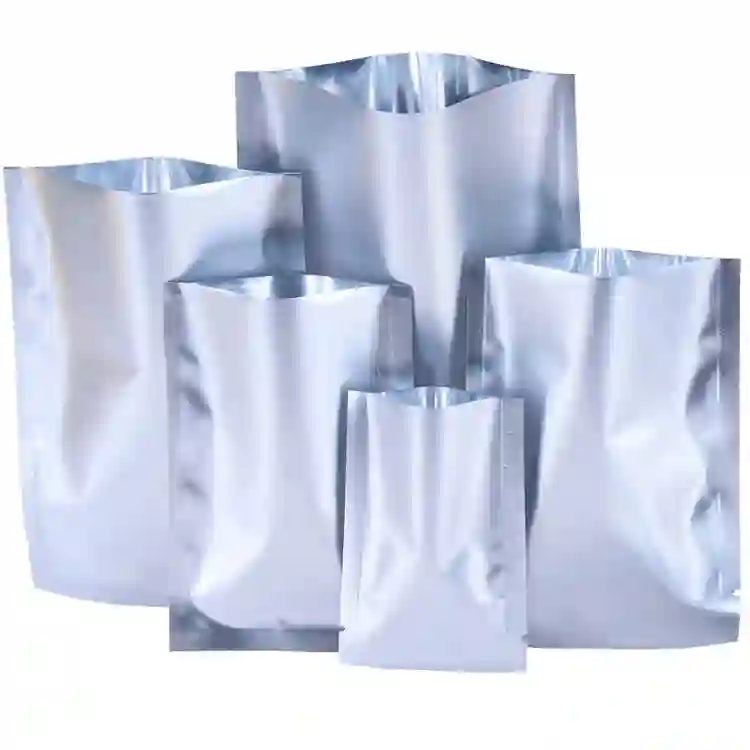
If you typed "which paper is used for wrapping of powder" into a search box, you're probably packaging a powder — protein, a spice blend, milk powder, a supplement — and trying to pick the right material before you talk to a factory. Here's the straight answer.
For most commercial powders, plain paper isn't the material you want on its own. You want a barrier laminate: either a kraft-look structure (kraft / PE / foil) that reads as "paper" but seals out moisture, or a full foil laminate (PET / AL / PE) when the product is sensitive. Pure kraft or glazed paper alone breathes, and powder pulls moisture from the air and cakes.
That's the part most supplier pages skip. Below is how the materials actually compare, which one fits which powder, and exactly what to send a factory so the quote you get back is usable.
Why "paper" is the wrong frame for powder
Powder is unforgiving. Most powders are hygroscopic — they pull water vapor straight out of the air. Add moisture and you get clumping, then caking hard enough that the customer can't get it out of the pouch. Many powders also go stale or lose potency when oxygen hits them — think protein, matcha, milk powder. Paper, even good kraft, is porous. It lets both moisture and oxygen through. So a "paper" pouch for powder usually means paper laminated to a plastic and often a foil layer: the paper is the outside face, the barrier is what's underneath.
There's one exception worth naming: unit-dose pharmaceutical powders are sometimes wrapped in glazed or greaseproof paper for dispensing. That's a clinical, single-use context and not what a brand shipping a retail pouch is doing. If you're selling a consumer or foodservice powder, ignore the paper-only answers.
The materials that actually work
|
Structure |
What it is |
Best for |
Barrier level |
|
Kraft / PE / foil |
Kraft outer, foil + PE inner |
Brands wanting a natural "paper" look with real protection |
High |
|
PET / AL / PE |
Aluminum foil core laminate |
Protein, milk powder, anything moisture- or oxygen-sensitive |
Highest |
|
PET / VMPET / PE |
Metallized film (no solid foil) |
Mid-shelf-life powders, lighter cost than foil |
Good |
|
PE-coated paper (roll film) |
Paper with PE layer, often foil-lined |
Sachets, sticks, single-serve seasoning |
Moderate–high (depends on lining) |
A quick read: if your powder is cheap and hardy — a dry rub, a flour blend — a kraft-look pouch gets you the aesthetic and enough protection for a reasonable shelf life. If it's protein, collagen, milk powder, or anything premium, go PET/AL/PE. The foil core is what stands between you and a returned batch.
Powder-specific features buyers forget
The material is half of it. The format decides whether the customer finishes the bag.
- Resealable zipper + tin tie. Powder gets used a little at a time. A zipper alone strains; add a tin tie and the bag closes flat on a shelf.
- Three-side seal for single serves. Stick packs and sachets for samples or portion control are usually 3-side seal, run from roll film. Good for trial sizes and foodservice.
- Pour spout or wide mouth. Not every powder needs it, but drink mixes and larger formats are easier with a spout or a wide opening.
- No degassing valve. Unlike coffee, powder doesn't off-gas CO₂, so you don't need a one-way valve. Skip it — it's a cost and a failure point you don't need.
- Matte or soft-touch finish. Cosmetic powders and premium supplements read better matte; it also hides fingerprints.
How to choose by product
- Protein / collagen / milk powder: PET/AL/PE, zipper, optional scoop window. Highest barrier.
- Spice blends / rubs / seasoning: kraft/PE/foil or PET/VMPET/PE. Spices are oily and aromatic — they need oxygen barrier so they don't fade or taste flat.
- Drink mixes / instant: zipper + spout, or 3-side seal sachets from roll film.
- Samples / promo: 3-side seal stick or small stand-up with digital print (low MOQ, see below).
What to send a supplier for a real quote
Same list as any custom pouch, with powder specifics called out:
- Product — what powder, and is it oily, hygroscopic, or oxygen-sensitive? (This decides the barrier.)
- Bag type — stand-up, flat bottom, 3-side seal, spouted.
- Size — width × height, gusset if stand-up.
- Material structure — or tell us the product and we'll spec it (kraft/PE/foil vs PET/AL/PE).
- Net weight — drives thickness.
- Quantity — per design.
- Print — colors, artwork ready?
- Finish — matte, gloss, soft-touch, foil stamp.
- Features — zipper, tin tie, window, spout, tear notch.
- Destination market — sets the compliance docs.
Send that and you get a number with MOQ and lead time on line one.
Why our setup fits powder runs
We run a network of 10+ certified partner factories (CE, ISO, FDA, BRC, food-contact-grade). Powder work lives or dies on barrier and hygiene, so the factory we match has to clear food-grade specs for your market. You can audit the plant and talk to the production manager directly. MOQ is 500 pieces digital / 5,000 gravure, sampling runs 3–5 days, mass production 7–15 days after approval, and samples are free and credited into your order. For a new powder SKU, that means you can test the market at 500 without a cylinder fee, then scale to gravure once it sells.
Ready to spec your powder pouch?
Tell us the product and we'll recommend the structure. Start with our powder & spice packaging page, browse stand-up pouches or aluminum foil bags, and send the checklist through contact.