
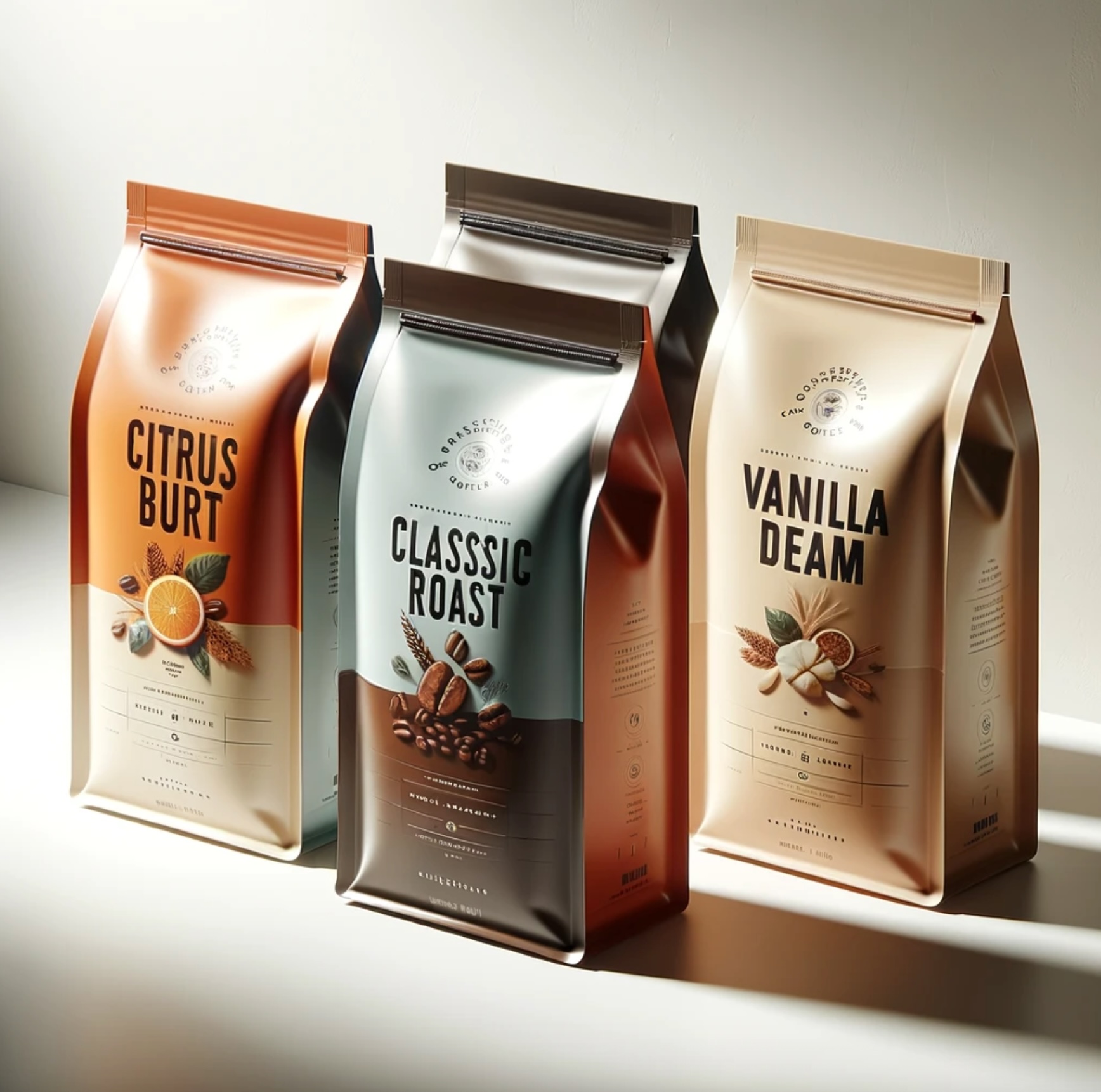
Start here: a "foil pouch" is laminated, not a sheet of tin
Quick definition so we're on the same page: a custom foil pouch is a flexible bag — usually stand-up, flat-bottom, or 3-side seal — built from a plastic film laminated with a thin aluminum foil layer, most often PET / AL / PE. You order it to your own size, thickness, and print. People reach for foil when the product inside can't tolerate moisture, oxygen, or light: roasted coffee, tea, powder, dried snacks, even electronics and pharma sachets.
One thing worth saying up front, because it causes more wrong orders than anything else: "foil pouch" and "metallized pouch" are not the same bag. If a supplier quotes you "foil" but the structure is MOPP / VMPET / PE, you're getting a metallized layer, not true aluminum. Both block light; only the AL layer gives you the full barrier. We'll come back to that, because it changes your cost and your shelf life.
True foil vs metallized — the difference that actually matters
This is the part most supplier pages skim past. Here's the plain version:
- True foil (AL layer) — a real aluminum foil core, typically somewhere in the single-digit-to-20-micron range depending on the product. It blocks light completely and cuts oxygen and moisture transmission far harder than any plastic film alone. That's why coffee and long-shelf powders go foil.
- Metallized (VMPET) — a plastic film with vapor-deposited aluminum, microns thin. It looks silvery, it blocks light, and it helps — but it's a step down on barrier and it can micro-crack at the fold. Fine for many snacks; risky for something that must stay bone-dry for a year.
If a vendor won't tell you which one you're buying, that's your answer. Ask for the layer structure in writing (PET/AL/PE = foil; MOPP/VMPET/PE = metallized) before you approve anything.
Why pick foil over kraft or plain plastic
Kraft and standard plastic laminates are cheaper and they look great on a shelf. They just breathe. The foil layer is what stops the three things that kill shelf life:
|
Need |
Kraft / PE |
Metallized |
True foil (PET/AL/PE) |
|
Light block |
Poor |
Good |
Complete |
|
Moisture barrier |
Moderate |
Good |
Strong |
|
Oxygen barrier |
Moderate |
Good |
Strong |
|
Cost |
Lowest |
Mid |
Higher |
So the question isn't "is foil best" — it's "does my product need the barrier." Coffee, tea, and most powders usually do. A short-life bakery item usually doesn't, and foil there is money spent on nothing.
Bag styles that take a foil build
Foil laminate works in every common format. Pick by how the product sits and ships:
- Stand-up pouch — the default for retail coffee, snacks, powder. See our stand-up range.
- Flat-bottom (box) pouch — more face for print, stable on shelf, good for 500 g–1 kg+.
- 3-side seal — cheapest to make, common for sachets and samples.
- Quad seal — boxy, holds heavier fill, popular for pet food and bulk.
- With window — our matte foil window bag lets buyers see the product while keeping the barrier.
- With valve — for roasted coffee, pair foil with a one-way degassing valve (covered in our coffee packaging guide).
Material structures you'll actually be quoted
Two builds cover most orders:
- PET / AL / PE — the workhorse true-foil structure. Print surface outside, aluminum core, poly seal layer inside. Our aluminum foil bag for tea and coffee is built on this.
- Kraft / AL / PE — foil protection with a paper look outside. The "kraft" you see is a print layer; the barrier is still the foil behind it. (Plain kraft with no foil does not protect coffee — we covered that separately.)
Total laminate thickness for food pouches commonly lands in the 90–160 micron band, but the right number depends on fill weight and puncture risk. Don't fixate on a single figure; tell the supplier what you're packing and let the structure follow.
When foil is worth it — and when it isn't
Straight talk, because overspec'ing wastes budget:
- Worth it: roasted coffee, loose leaf tea, protein or collagen powder, spices you export, anything moisture- or light-sensitive with a long shelf target.
- Probably overkill: short-shelf bakery, fresh produce, items that move in days. A metallized or even a good plastic laminate covers those, and you keep more margin.
- Not recommended: anything that needs to microwave or retort unless the supplier confirms a rated structure. Foil blocks microwave energy and standard foil isn't retort-rated by default.
Getting custom ones made — the numbers
Our current production, not a catalog guess:
- MOQ — digital print from 500 bags; gravure (cylinder) print from 5,000. The gap is the plate, not the bag.
- Sampling — 3–5 days to a physical pouch you can fill and drop-test.
- Mass production — 7–15 days after artwork sign-off, before freight.
- Certifications — partner factories hold CE, ISO, FDA, BRC and food-contact grade as the market requires.
- Samples — free; the cost folds back into your production order, so you're not paying twice.
- Backing — 10+ certified factories, factory inspection supported, and you can talk directly to the production manager rather than relaying through sales.
The gravure plate fee we subsidize by order volume, so per-bag price drops as you scale — ask for the bracket when you request the quote.
What to send for a real quote
Eight points gets you a number the same day:
- Bag style (stand-up / flat-bottom / 3-side / quad)
- Filled weight (250 g, 500 g, 1 kg…)
- Foil or metallized — say which, and we'll confirm the structure
- Thickness feel / puncture need (or let us spec it)
- Print — colors, matte/gloss/soft-touch, window yes/no
- Extras — zipper, tear notch, valve, hang hole
- Quantity and print method (digital vs gravure)
- Destination country (drives the cert check)
Our contact page takes it. If your spec is close to a past run we can usually match it faster than starting cold.
Bottom line
A foil pouch is the right call when barrier is the deal — coffee, tea, powder, light-sensitive goods. Get the layer structure in writing, pick the style by shelf and ship, and send the eight points above. You'll have samples in hand before your next production date, and you'll know exactly what you're paying for.