
If you roast coffee, the bag is doing more than holding beans
Here's the short version, because it saves you a wrong order later: a degassing valve coffee bag is any coffee pouch — stand-up, flat-bottom, or side-gusset — fitted with a small one-way valve. The valve lets carbon dioxide escape and stops oxygen getting back in. You want one the moment you pack freshly roasted beans, because those beans keep releasing CO₂ for two to four weeks after they come off the roaster. Seal them in a plain bag with no vent and you'll watch the pouch puff up like a balloon, or worse, split at the seam.
We went deeper on why the valve works and whether it actually protects shelf life in our coffee packaging guide. This piece is the practical follow-up: what kind of bag to put the valve on, where it should sit, and how to get custom ones made without surprises.
So what exactly is the valve doing?
It's a tiny plastic disc, food-grade, with a membrane that only opens one way. CO₂ pushes out; air can't push in. That's the whole trick. What it does not do is keep your coffee fresh on its own — the barrier film around the bag does that job. A lot of suppliers blur the two, so here it is plainly: the valve handles the gas window; the laminate handles the shelf life. If a salesperson tells you "the valve keeps coffee fresh for a year," they're skipping half the story.
Do you even need one?
Mostly yes, if you're packing whole beans within a few weeks of roasting. A few honest exceptions:
- Pre-ground or instant coffee that you nitrogen-flush and seal — the CO₂ is already gone or never mattered, so a valve adds cost with little benefit.
- Very long rest periods before bagging (some roasters rest beans 1–2 weeks, then bag) — you can sometimes get away without it, but most small roasters bag same-week and should keep the valve.
- Single-dose filter wraps for pour-over service — those use plain paper, not pouches, and sit outside this discussion.
If you're a microroaster selling 250 g bags at a Saturday market, the valve is non-negotiable. If you're a private-label brand shipping pre-ground into retail, talk to your supplier about whether flushing alone covers you.
Which bag style takes a valve
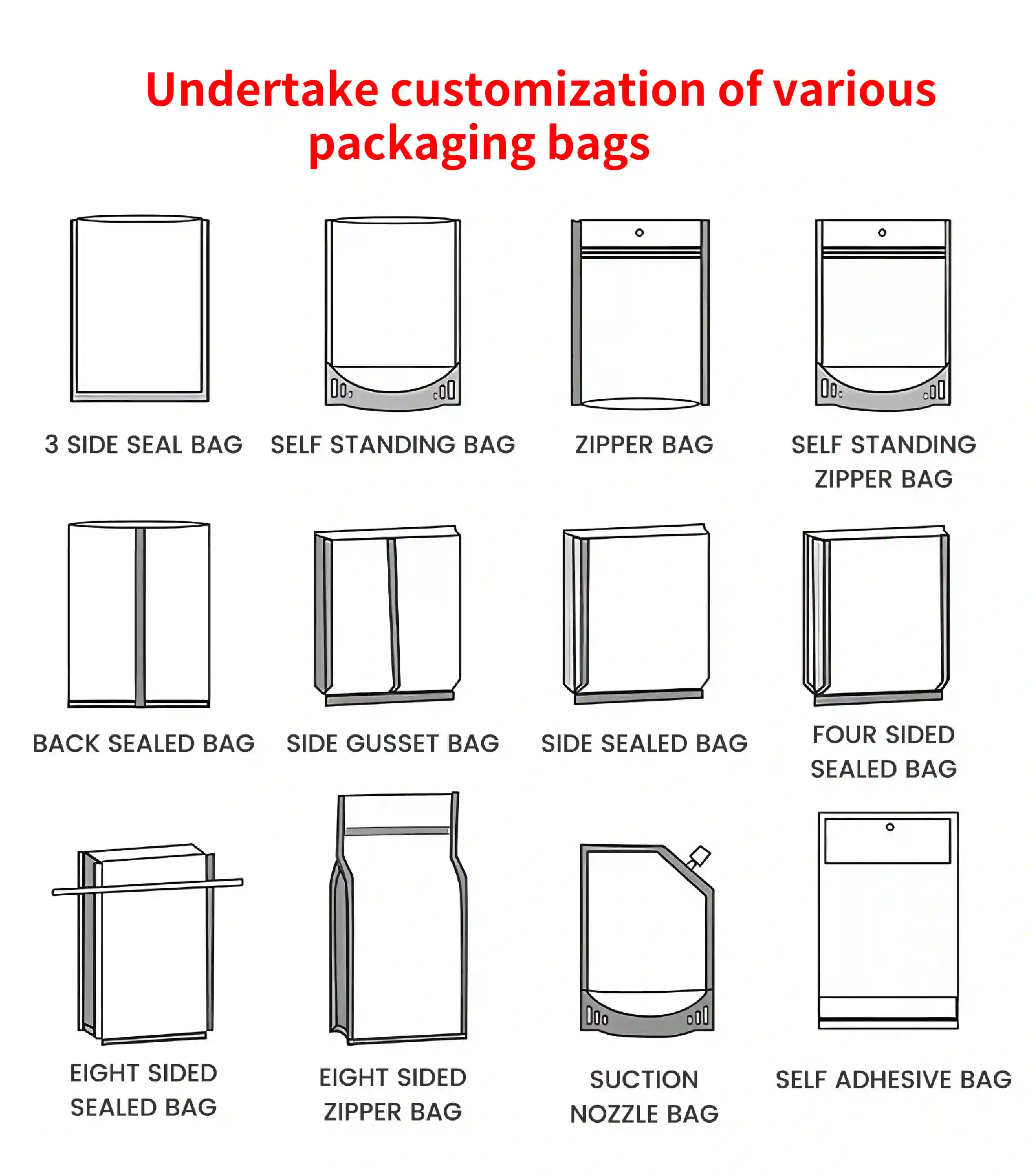
All the common coffee formats can carry a valve. The difference is shelf presence and fill volume, not the valve itself.
|
Bag style |
Best for |
Valve fit |
|
Stand-up pouch |
250 g–1 kg retail, most roasters |
Standard, sits on front lower third |
|
Flat-bottom (box pouch) |
500 g–1 kg+, premium look |
Standard, more face area for print |
|
Side-gusset (pillow) |
250 g–1 kg, classic coffee shape |
Standard, narrower front panel |
|
3-side seal |
samples, single doses, small runs |
Possible but tight; check valve clearance |
For a first custom run, the stand-up pouch with valve is the safe default — it stands on the shelf, takes a zipper, and the valve has room. Our full stand-up range is here if you want to compare finishes.
Kraft, foil, or matte — what the material changes
The valve is the same part across all three. What changes is how long the coffee stays good once the bag is closed:
- Kraft / PE / foil — the "paper" look roasters love, with a foil layer inside for aroma. Good everyday protection, solid shelf presence.
- Matte foil with window — premium feel, lets the buyer see the beans. See our matte foil window bag.
- PET / AL / PE full foil — maximum barrier for long-haul export or warehouse storage. Our aluminum foil coffee bag is the heavy-duty option.
Don't let anyone tell you kraft alone protects coffee. Plain kraft breathes — the foil layer behind it is what does the work. If a supplier quotes "kraft coffee bags" with no inner barrier, ask what's laminated inside.
Valve placement — the part people get wrong
This is where cheap bags fail. Rules we hold our partner factories to:
- Diameter — industrial standard is around 21 mm. Smaller looks neat but clogs faster with fine ground; bigger is harder to seat cleanly. Stick with 21 mm unless you have a reason.
- Position — front panel, lower third, centered or slightly off. Never on the zipper strip, never under the tear notch, never on the sealed edge.
- Before final seal — the valve is applied while the web is still open, then the bag is sealed. If you see valves sitting proud of a finished seam, the line ran it wrong.
- Ink coverage — don't print solid ink right over the valve vent. It can bridge the membrane and freeze the one-way action.
A valve in the wrong spot either leaks or just looks cheap. Both cost you more than doing it once, properly.
Getting custom ones made — the numbers that matter
If you're ordering from a Chinese supplier (we are one), here's what our current production actually runs, not a brochure figure:
- MOQ — digital print starts at 500 bags; gravure (cylinder) print starts at 5,000. The gap exists because gravure needs a plate; digital doesn't.
- Sampling — 3–5 days to a physical sample you can fill and drop-test.
- Mass production — 7–15 days after artwork sign-off, before freight.
- Certifications — our partner factories hold CE, ISO, FDA, BRC and food-contact grade as applicable to the market you're shipping to.
- Samples — free; the cost is folded back into your production order, so you're not double-paying.
- Backing — we work with 10+ certified factories, support factory inspection, and you can talk directly to the production manager rather than a sales layer repeating messages.
The gravure plate fee we subsidize by order volume, so the per-bag price drops as you scale — ask for the bracket when you request the quote.
What to send a supplier for a real quote
Don't write "coffee bags, 500, with valve" and wait. Send this and you'll get a number back the same day:
- Bag style (stand-up / flat-bottom / side-gusset)
- Filled weight (250 g, 500 g, 1 kg…)
- Material feel (kraft look / matte foil / full foil)
- Valve — yes, and color (black, white, clear)
- Print — colors, matte/gloss/soft-touch, any window
- Extras — zipper, tear notch, hang hole
- Quantity and print method (digital vs gravure)
- Destination country (drives the cert check)
That's the whole list. Our contact page takes it, and if your spec is close to a past run we can usually match it faster than starting cold.
One last thing before you order
Skip the valve only if you've got a real reason (pre-ground + nitrogen, or long rest before bagging). For everyone roasting and bagging within the week, it's the cheapest insurance against a puffed or split bag on a customer's shelf. Pick the style by shelf space, pick the material by how far the bag travels, and send the eight points above — you'll have samples in your hands before the next roast date.