
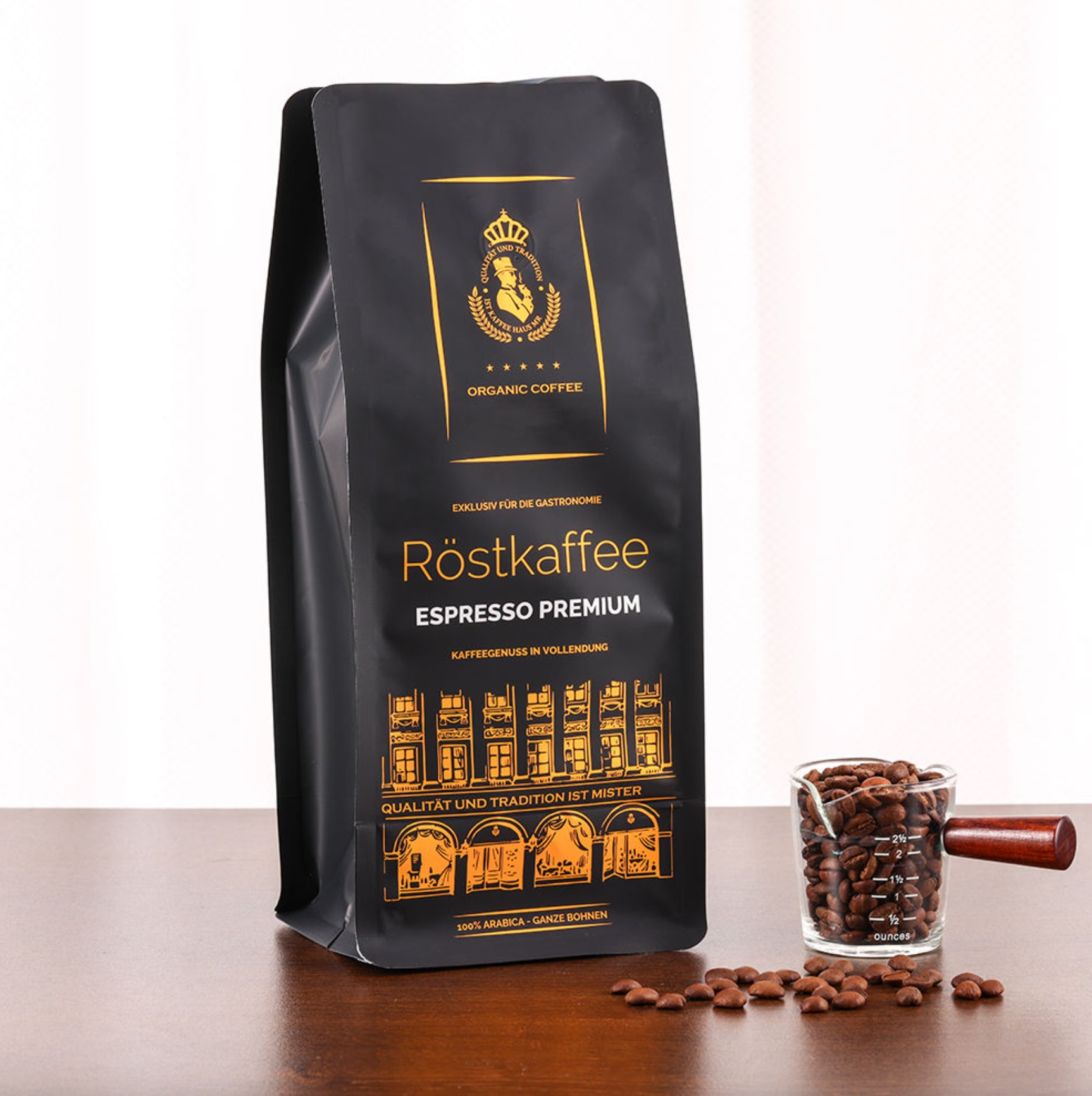
For a small roaster, the bag matters more than most people admit. You nail the roast, you ship it in a pouch that lets oxygen or light in, and two weeks later the customer tells you it tastes flat. We hear this story a lot — usually after the first order went out in the wrong material.
This isn't a spec sheet. It's what we tell buyers when they call asking which bag to actually order. Three materials come up every time: kraft, foil, and valve bags. Here's how we separate them.
Start with the enemy: oxygen, not light
Coffee goes stale because of oxygen, then heat, then light, in that order. A bag's job is to slow oxygen first. That single fact decides most of the comparison below.
If your beans are gone in two weeks (café restock, local farmers market), you have room to compromise on barrier. If you ship across the country or sit in a warehouse, barrier is the whole game.
Kraft coffee bags — the honest, low-cost option
Kraft paper bags are what most roasters start with. They look right, they feel right, and they're cheap.
What they do well:
- Natural, craft look that reads "small batch" on a shelf.
- Lowest unit cost, especially at entry MOQ.
- Fine for ground or whole bean with a short turnaround.
What they don't do: plain kraft paper is porous. Even with a PE lining inside, it slows oxygen — it doesn't stop it. Realistically you get 4–8 weeks of decent freshness, not the 6–12 months people assume.
We tell new roasters: kraft is for the bag that sells the brand, not the bag that preserves the bean for months. If your customer opens it within a month, kraft is a perfectly good call.
Foil coffee bags — the barrier workhorse
Aluminum foil (or metallized) pouches are where freshness lives. A proper foil laminate drops oxygen transmission to near zero, which is why nearly every national coffee brand ships in foil stand-up pouches.
What they do well:
- 6–12 months shelf life for whole bean, if you pair it with a valve and a good seal.
- Blocks light completely — important if your bags sit under retail lighting.
- Supports matte, gloss, and clear-window finishes without losing barrier.
The trade-off is feel and cost. Foil doesn't read "craft" the way kraft does, and it costs more per unit. But if you export, wholesale, or just don't want returns from stale bags, foil is the safe default.
One gotcha buyers miss: "foil" in our catalog means a real aluminum layer (AL). A lot of cheap "foil" bags are actually metallized PET (VMPET) — good barrier, but not the same, and it matters for long sea freight. We'll say which one you're getting on every quote.
Valve coffee bags — the one that breathes out, not in
A one-way degassing valve is not a material. It's a small plastic fitment glued into the bag. Fresh roasted coffee off-gasses CO₂ for days. Trap that gas in a sealed pouch and it balloons, or it pushes flavor out with it.
The valve lets CO₂ escape and stops oxygen coming back in. That's the whole trick.
When you need a valve:
- You bag within 24–48 hours of roasting (most roasters do).
- You ship whole bean, not ground.
- You want the bag to look flat and tight on the shelf, not puffed.
We covered the mechanics in degassing valve coffee bags: how to choose and order. The short version: valve + foil = longest freshness; valve + kraft = good look, shorter life.
So which one do you order?
Most of our buyers land in one of three spots:
|
Your situation |
Order this |
Why |
|
Local café / market, sold within a month |
Kraft + optional valve |
Cheap, on-brand, freshness is fine |
|
Wholesale, export, or 3+ month shelf |
Foil + valve |
Maximum barrier, longest life |
|
Valve required but want craft look |
Kraft + valve |
Breathes out, still reads small-batch |
There's no wrong answer if it matches your turnaround. The mistake is picking on price alone and ignoring how long the bag sits before it's opened.
What it actually costs at our MOQ
Numbers, because "affordable" means nothing without them:
- Digital print MOQ: 500 pcs. No plate fee. Best for test runs, seasonal roasts, and small brands. Lead time: 3–5 days for proof, 7–15 days for bulk.
- Gravure MOQ: 5,000 pcs. Lower unit cost at volume. Plate/cylinder cost is subsidized based on order quantity — bigger run, smaller effective overhead.
- Samples: free, and the sample cost is credited against your production order.
- Certifications on partner lines: CE, ISO, FDA, BRC, and food-contact grade — we work with 10+ certified factories, support factory audits, and you can talk directly to the plant manager on request.
If you're under 500 units, digital is your only real path. Above 5,000, gravure usually wins on unit price. Between them, it comes down to how fast you need it and how many SKUs you run.
The part most suppliers skip
A bag is only as good as the seal and the valve placement. We've seen "premium" foil bags fail because the valve was seated off-center and the seal was thin. When you request a quote, ask for valve position and seal width in writing — we spec both on every coffee order, and we'll show you the drawing before we print.